

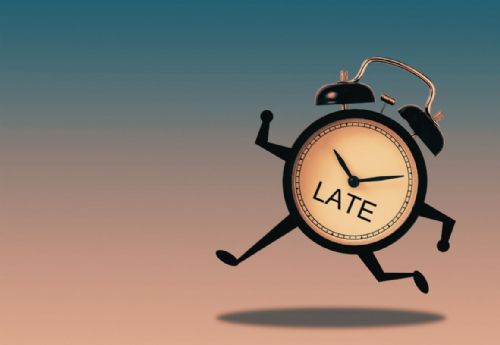
When "Just Being Late" Becomes a Big Deal
John had been married to Tammy for twenty years. Overall, they had a great marriage, but there was one issue that had slowly become a major source of frustration: Tammy was late for everything. At first, John thought nothing of it, but over time, it chipped away at his patience like a beaver taking one bite at a time out of a big oak tree. One bite doesn't seem like much, but eventually, the tree falls. And eventually, for John, the tree fell.
John tried everything. They fought about it, he begged her to change, and he even threatened her, but nothing worked. Tammy admitted that being late was a problem, but she wouldn't change. Her response was, “That's just the way I am.” The problem wasn't just affecting John anymore. Their three children were affected too. They would all sit in the car waiting for Tammy to come outside, sometimes for nearly thirty minutes. Eventually, they started taking separate vehicles because it was easier than waiting.
One day, John walked into my office for counseling and pleaded his case. My first response was, “We can't help anyone who doesn't want help.” But then I thought, maybe we can help John approach this differently and perhaps help Tammy see the situation from another perspective. So, off we went into counseling.
Let me make one thing clear before we go any further. This article isn't about occasionally being late because of traffic, an unexpected situation, a sick child, or something else outside your control. Life happens, and we all need grace sometimes. I'm talking about someone who has developed a lifestyle of being late at the expense of the people around them.
When it comes to chronic lateness, I want to focus on three things: your personality, the impact on others, and God's Word.
Your Personality
Our personalities often drive our behavior. That's a good thing because God has given us many wonderful traits, but those same personalities can also come with weaknesses. As we mature, we should learn to recognize those weaknesses and work on them rather than using our personalities as an excuse.
For example, my personality tends to be aggressive, decisive, task-oriented, and focused on getting things done on time and on budget. Those traits can be helpful, but they can also cause me to be insensitive, abrasive, or too focused on the task instead of the relationship. I've had to make a conscious effort to slow down, be more careful with people, and focus more on relationships.
So, if your personality contributes to your chronic lateness, don't tell people, “That's just the way I am.” More importantly, don't tell yourself that. Instead, recognize it as an area of weakness and work on it. Correct it. Change it. Grow from it. Your personality may explain your behavior, but it doesn't have to excuse it.
The Impact on Others
Being late often seems insignificant to the person who is late. What's another ten or fifteen minutes? But those minutes can feel very different to the person sitting in the car waiting, the friend sitting at the restaurant, the child waiting for a parent, or the spouse who planned the evening around a specific schedule.
Most people tolerate chronic lateness without saying much. They don't want to create conflict, so they simply wait. But don't interpret someone's silence as acceptance. Sometimes people stop complaining because they've stopped expecting you to change.
I asked several people to tell me honestly how they feel about someone who is consistently late. Their answers were eye-opening. Here is what people said:
- “Nothing shows you don't care about me more than showing up late.”
- “Showing up late is like a slap in my face.”
- “Showing up late is disrespectful.”
- “Showing up late is selfish and demeaning to everyone else.”
- “Showing up late shouts out loud that you think you are more important than the rest of us.”
- “I would rather you didn't come at all than show up late all the time.”
- “Your word means nothing to me.”
Those are tough words, but they are worth considering. You may not intend to be disrespectful, selfish, or inconsiderate, but repeated behavior can still create those feelings in others. Your intent doesn't erase the impact your behavior has on the people around you.
Chronic lateness can slowly damage trust and respect in every relationship, especially marriage. The person who is always late may think, “It's only fifteen minutes.” The person waiting may be thinking, “Why doesn't my time matter to you?”
The point is that chronic lateness has an impact on other people whether we intend it to or not.
Signs Your Chronic Lateness Is Negatively Affecting Your Relationships
- People may stop inviting you. If friends repeatedly have to wait for you, they may eventually decide it is easier not to include you in plans.
- Friends may stop depending on you. When someone regularly arrives late, others may begin thinking, “I can’t count on them to be here when they say they will.” Reliability is an important part of friendship.
- Resentment can build. Even if you don't intend to disrespect someone, repeatedly making them wait can create frustration and resentment over time.
- People may feel unimportant. A friend who has rearranged their schedule to meet you may interpret repeated lateness as, “My time isn't as important as yours.”
- Friendships can become less spontaneous. Friends may hesitate to make plans with you because they anticipate delays, extra waiting, or having to adjust the schedule around you.
- People may begin making plans without you. This can happen gradually. Instead of confronting the issue, friends may simply stop expecting you to participate.
- Your reputation can spread beyond individual relationships. If several people have the same experience, you may develop a reputation for being unreliable or chronically late. That can affect new friendships as well as existing ones.
So, if you are consistently late, try looking at the situation from the other side. Ask yourself, “If I were the one sitting in the car waiting for me, how would I feel?” Ask your spouse. Ask your children. Ask the people closest to you.
Don't just listen for what they say. Pay attention to what your behavior may have already taught them to expect from you.
God's Word
Does the Bible specifically say, “Thou shalt not be late”? No. But Scripture does give us principles that apply. Ecclesiastes 7:1 says, “A good name is better than precious ointment.” Our reputation matters. If we repeatedly tell people we'll be somewhere at a certain time and are consistently late, eventually people stop trusting our word.
Philippians 2:3 says, “Do nothing from selfish ambition or conceit, but in humility count others more significant than yourselves.” What if being on time isn't just about the clock? What if it's about honoring people? Being on time can communicate, “You matter to me. Your time matters to me. I gave you my word, and I intend to keep it.”
If you are chronically late, I encourage you to stop saying, “That's just the way I am.” Instead, ask yourself, “How is my behavior affecting the people around me?” Then be willing to do something about it.
Leave earlier. Build margin into your schedule. Set reminders. Stop underestimating how long things will take. And when circumstances genuinely prevent you from being on time, communicate with the people who are waiting for you.
This isn't about judging or condemning someone who struggles with being on time. It's about growth. Sometimes the little things aren't really little. Twenty minutes in a car can become a marriage issue. Repeatedly breaking your word can become a trust issue. And something that seems insignificant to you can become very significant to the people you love.
So, if you're the person who is often late, I hope this article rattles your cage—not to make you feel condemned, but to help you grow. Don't hide behind, “That's just the way I am.” Instead, say, “That's an area where I need to grow.”
Make a commitment today to be on time, honor your word, and become someone others can count on.
Now go and be different!
 Visitor Comments (0)